Showing posts with label destination. Show all posts

Monday, May 2, 2016

Loktak Lake


Manipur’s Floating Lake – Loktak Lake in Manipur is largest freshwater lake, best viewing of natural scenery for relaxation. June to January is the best time to visit.

Friday, October 16, 2015

Quibble Island


Quibble Island is a river island in the state of Tamil Nadu in India. It is formed by the Adyar River and one of its tributaries. It is situated between the Chennai neighbourhoods of Mylapore and Adyar. During British rule, a European cemetery was located here.

Tuesday, August 18, 2015

Jammu


One of the most visited destinations in North India, Jammu is a beautiful city dotted with a number of tourist attractions including temples. While the architectural beauty of the temples leaves you mesmerized, the scenic beauty and pleasing ambiance of the city is not less, it makes you visit again and again. Jammu is best known for housing Vaishno Devi, which is one of the most sacred sites of the Hindus. When it comes to tourist attractions in Jammu, temples dominate the destination Jammu. Apart from the popular shrine of Vaishno Devi, Raghunath Mandir, Bawey Wali Mata Temple, Ranbireshwar Temple, Mahamaya Temple, Peer Kho Cave Temple and Panchbakhtar Temple are popular shrines in Jammu.
Jammu is also popular for housing a number of historical structures like Mubarak Mandi Palace, Bahu Fort and Amar Mahal Palace. These structures showcase different architectural styles such as European, Mughal and Rajasthani. To sum up, Jammu is a great destination if you wish to explore the religious and scenic side of India. ‪#‎india‬ ‪#‎jammu‬‪#‎tourism‬ ‪#‎destination‬ ‪#‎nature‬ ‪#‎history‬

Matheran


Your toy train chugs along slowly without a care in the world. During the two hour ascent, food vendors and monkeys jump on and off as the valley glides by sedately.
Sprawling languidly at an altitude of 800 metres is Matheran - an undulating hilltop cloaked in green.
The cliffs of Matheran with incredibly steep drops to the plains below offer stunning viewing points. These panoramic vistas, by day and night, leave you feeling light headed. Standing at Hart Point in pitch darkness you get a breathtaking glimpse of the lights of busy Bombay. Matheran abounds in such quixotically named points. popular sites for picnics and fireside revelry.
The old world charm of the British and Parsi home capitavtes you all the way up to the Charlotte Lake. On each trip through the main bazaar you purchase some of its attractions - care and leather articles, hats, chappals and the irresistible chikki loved by young and old alike.
Temperatures vary from 16° C in winter to 32° C in summer with an annual rainfall of 524 cms. It is a place to visit round the year, monssons included, for the young at heart. MTDC provides accommodation facilities, the total capacity being 83.

                                                             
Weather 
Temperatures vary from 16° C in winter to 32° C in summer, with an annual rainfall of 524 cms. October to May is the best time to visit.

Sunday, August 16, 2015

Udayagiri and Khandagiri caves


The caves, 6 km west of Bhubaneswar, on the two low hills of Udayagiri and Khandagiri, date from the time of Jain occupation of the region, at least the second century BC. A narrow valley winds between the hills, the route of an early Buddhist pilgrim track leading to a stupa which probably stood on the present site of Bhubaneswar. The coarse- grained sandstone which forms Khandagiri ('broken hill') and Udayagiri ('hill of the sunrise') rises nearly 40 m above the surrounding lateritic and infertile plain. The crumbling nature of the sandstone into which the caves were dug has exposed them to severe damage, moderately repaired by the Archaeological Survey of India.
The Jain caves are among the earliest in India. Furthermore, some of the rock inscriptions found above the Hati Gumpha (Elephant Cave, No 14) and elsewhere, speak of the Chedi Dynasty who ruled over Kalinga from their capital, probably at Sisupalgarh, 9 km southeast of Khandagiri.

Kharavela, according to his own record, extended his rule across a large part of North, Central and South India. At home he made great efforts to improve canals, rebuild his capital city of Kalinganagara, and also to excavate some of the caves at Udayagiri- Khandagiri. Probably all the caves now visible were constructed during the 150 years before Christ. Designed for the ascetic life of Jain monks, they simply provided dry shelter, with no concessions to any form of comfort. Too low to stand in, the cells are no more than cramped sleeping compartments.

Thursday, August 13, 2015

Goa State Museum


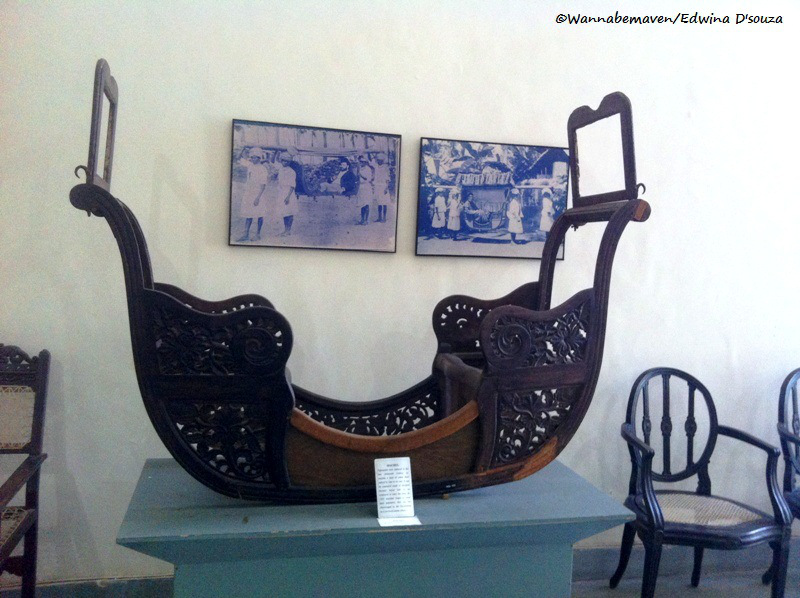
This spacious museum east of town houses an eclectic, if not extensive, collection of items tracing aspects of Goan history. As well as some beautiful Hindu and Jain sculptures and bronzes, there are nice examples of Portuguese-era furniture, coins, an intricately carved chariot and a pair of quirky antique rotary lottery machines.

The most interesting exhibit is in the furniture room: an elaborately carved table and high-backed chairs used by the notoriously brutal Portuguese Inquisition in Goa during its reign of terror. The table’s legs feature carved lions and an eagle on one side and four human figures on the other.

Tuesday, August 11, 2015

Chandoli National Park


Chandoli National Park in Sangli District Maharashtra state, India, established in May 2004, Earlier it was a Wildlife Sanctuary declared in 1985. Chandoli Park is notable as the southern portion of the Sahyadri Tiger Reserve, with Koyna Wildlife Sanctuary forming the northern part of the reserve. Chandoli National Park is located near the Chandoli Dam between longitudes 73°40' and 73°53' E and latitudes 17°03' and 17°20'N near Sangli in Western Maharashtra. It is located at the junction of Sangli District, Kolhapur District, Satara District and Ratnagiri District. It lies between the Koyna Wildlife Sanctuary and Radhanagri Wildlife Sanctuary and forms the southern part of the Sahyadri Tiger Reserve.
The historical places of the park include the 17th century Shivaji's Forts, Prachitgad and Bhairavgad, of the Maratha kings Shivaji Maharaj and his son Sambhaji Maharaj. Ruins of the Bhavani temples palatial buildings in Prachitigad and Kalavantin vihir depict the ancient glory of the Maratha Empire. Most of the protected area was used an open jail for the "prisoners of war" of the early Imperial Maratha Conquests during Shivaji Maharaj's rule. Sambhaji Maharaj used Prachitgad as an observation point and recreational place. The forest types seen here are a mix of Malabar Coast moist forests and North Western Ghats moist deciduous forests. In the dwarf evergreen forests, some tree species commonly seen here are the anjani ironwood tree, jamun, pisa (angustifolia), fig, Olea (diocia), katak spinous kino tree, nana or Crape myrtle (lanceolata), kinjal, kokum tree and phanasi false kelat (brachiata). Other trees dominating the landscape include asan wood or ain or Indian laurel, amla or Indian gooseberry, umbar or devil fig (hispida) and harra or chebulic myrobalan.
Grasses commonly seen here include bangala or bluestem grass sp., dongari or golden beard grass (fulvus), black spear grass, kalikusli or tangle grass, anjan grass or buffel grass, grader grass or karad or kangaroo grass (quadrivalvis) and grasses belonging to Poaceae family, like saphet-kusli or Aristida funiculata. Insectivorous plant species like sundews and bladderworts sp. are also found in this protected area. Nearly 23 species of mammals, 122 species of birds, 20 species of amphibians and reptiles are known to be resident in the forests of Chandoli.
Bengal Tigers, Indian leopards, Indian bison, leopard cats, sloth bears and Indian giant squirrels are quite conspicuous here.
Many prey species of ungulates such as barking deer, sambar deer, mouse deer and blackbuck are present. A census carried out in 2002 by the Forest Department showed a rise in the number of tigers, leopards, gaur, barking deer, mouse deer, sloth bears and blackbuck. A similar census carried out in 2004 showed a rise in gaur population in the Kolhapur Wildlife Division from 88 to 243. ‪#‎india‬ ‪#‎nationalpark‬ ‪#‎nature‬‪#‎bharat‬ ‪#‎flora‬ ‪#‎fauna‬

Sunday, August 9, 2015

Dadra and Nagar Haveli


Situated on the foot hills of Western Ghats, Dadra and Nagar Haveli, the Union Territory, not only boasts of rich natural beauty but also of an interesting history. The land, which was ruled by Koli chiefs later came into the hands of Marathas who offered Portuguese the right to collect revenues from here to seal their support to fight Mughals. After Indian liberation the land was still under the control of Portuguese until it was freed in 1954. The Union Territory merged with India in 1961. Dense forests, magnificent mountain ranges, serene valleys, stunning ranges of flora and fauna, breathtaking rivers – if this is the package you expect on your holiday, head for Dadra and Nagar Haveli. Your expectations will be more than adequately fulfilled.

Thursday, August 6, 2015

Mysore Palace


Mysore Palace, also known as Mysore Maharaja Palace is one among the largest palaces in India. It is situated in the city’s center. The palace was built in the year 1897 using wood, which was damaged due to fire. It was later reconstructed in the year 1912. The architecture is a blend of Hindu, Islam, Gothic and Rajput styles. The stunning interior is a display of intricate craftsmanship. While it is a feast to your eyes during daytime, you will be completely mesmerized by the sight of the palace illuminated by over 98000 bulbs in the night.

Wednesday, August 5, 2015

Ajanta & Ellora Caves


The Ellora Caves and the Ajanta Caves are near Aurangabad in Maharashtra. Chalukya and Rashtrakuta kings ruled over the Deccan from the middle of the 6th century AD to almost the end of the 12th century. The former were tolerant of all religions and, under their liberal patronage, the technique of excavating rock-cut temples reached a high degree of perfection. With the rise of the Rashtrakuta and other powers in the Deccan, there was a decline of Buddhist influence, but artistic activity continued unabated.
Rock-hewn architecture reached its zenith in western India as the Western Ghats provided suitable sites for excavation and carving. No existing caves as such were used. Thus architecture was sculpture on a mass scale. The solidity of the rock obviated the need for periodic repairs, and many of the temples are in a state of good preservation to this day.
An aesthetic vision and advanced technical knowledge combined in the architects. It is interesting to note that the excavation usually proceeded from the top downwards—the natural rock-surface below providing a platform and eliminating the necessity of scaffolding.
The Ajanta Caves, accidentally discovered by a shooting party in 1829, are excavated out of amygdaloid trap rock, and situated in the scarped side of a deep ravine that is shaped like a crescent. They are entirely Buddhist and date from about 200 BC to approximately 650 AD. It is of interest to note that the Chinese Buddhist travellers, Hiuen Tsang and Fa Hien, refer to Ajanta in accounts of their travels.
Of the 29 excavations, four are chaitya halls (all differing in design) and the rest are viharas. The decorative motifs differ with the age of the excavations.
The Hinayana and Mahayana phases are also well defined, the first being simpler the second being much more decorative and characterised by images of the Buddha. The caves are unique in that they combine three forms of art—architecture, sculpture and painting.
The technique employed in the frescoes was to spread on the rough surface of the rock a layer of clay mixed with cow- dung and rice-husks. Sometimes pounded brick mixed with fibre was added.
Over the plaster was spread a coating of white lime plaster, and the surface was kept moist while the colour was applied. The outlines were first drawn in red. The colours used were local pigments and all the colours except blue could be obtained from neighbouring hills. The paintings sought their inspiration from the Jatakas, legendary Buddhist stories.
Caves No. 13, 12, 10, 9 and 8 (according to chronological sequence) belong to the Hinayana period; No. 11, 14, 15, 16, 17, 19, 18, and 20 and perhaps No. 6 and 7 belong to a later Mahayana period ending approximately AD 580 No, 1 to 5 and 21 to 29, also Mahayana in character, came into existence between AD 500 and 650. Caves 19 and 26 (chaitya) and 1 and 16 (viharas) are good representative specimens. No. 16 is one of the most important caves, being the most elegant architecturally. The shrine has a large statue of the Buddha preaching.
This cave contains the famous fresco of ‘The Dying Princess’. The Ellora Caves are unique because the visitor can see three styles of architecture at one place, 12 Buddhist, 5 Jain and 17 Brahmanical caves being located here side by side. Unlike the Ajanta cave temples, they are excavated in the sloping sides of a hill and not in a perpendicular cliff.
As a result, most of the temples have courtyards and sometimes an outer wall or rock with an entrance through it. The 10th century Arab geographer Masudi and the European Thevenot who visited the temples in 1667, have left accounts of these cave temples in their writings.
The Buddhist temples were excavated between AD 350 to 700 Compared with the Brahmanical temples, they are austere and solemn. Cave No. 10, the only chaitya at Ellora, is in the form of a chapel, reminiscent of Ajanta and Elephant. It is called Vishvakarma, the name indicating its dedication to the patron saint of the craftsman.
Caves No.11 and 12 are some of the few caves in India with more than one storey.
The next group consists of Brahmanical caves, excavated between the seventh and the early eighth century. No. 14, Ravan ki Khai (Excavation of Ravan) is different from the Buddhist temples, having a front aisle of 4 pillars, 12 columns enclosing a central hall and, beyond, a shrine standing by itself at the end of the hall.
The south wall has Shaiva sculptures; the north wall has Vaishnava (i.e. pertaining to Vishnu) sculptures, representations of Durga, Lakshmi, the Varaha or boar incarnation of Vishnu, etc. Inside the shrine is a figure of Durga. Cave No. 15 is the Dasavatara cave.
The Kalidasa temple, dedicated to Shiva, is considered to be a magnificent achievement of the ancient Hindus, and represents Shiva’s celestial abode, Mt. Kailasa. It was executed under the patronage of the Rashtrakuta king, Krishna I. It is one of the grandest monolithic excavations in the world. The architects worked from above downwards, until they struck one gigantic solid rock which they shaped into a temple. The hillside was cut down to the level of the base of the hill and it has been estimated that 3 million cubic feet of rock were chiselled out.
The remarkable imagination which conceived it, the unstinted labour which was spread over an uninterrupted period of a hundred years and finally, the sculpture with which it is adorned have been aptly summed by Percy Brown: “This plastic decoration is something more than a record of artistic form, it is a great spiritual achievement, each portion being a rich statement glowing with meaning.”
Kailasa stands in the middle of a vast court in which are carved colossal elephants and other animals. The main temple is dedicated to Shiva. The temple proper stands on a plinth and has an impressive frieze of boldly carved elephants and lions.
The temple is approached by flights of steps and is double- storeyed with chapels and monastic halls hewn out of the rock. Over the temple rises the tower in three tiers, with a projecting gable front surmounted by a cupola.
The interior consists of a pillared hall with a cruciform central aisle. The friezes on the wall have scenes from the Ramayana executed with superb artistry and craftsmanship. The pavilion has Shiva’s bull, Nandi, in front. The two pillars on either side of the Nandi shrine are called dhvajastambhas (flag-staffs). They have symbolic carvings pertaining to the cult of Shiva and are fine works of art.
In the final group of five Ellora caves (the Jain group), the most interesting are the Indra Sabha (assembly hall of Indra, king of the gods) and Jagannath Sabha (assembly hall of the lord of the universe).
The Indra Sabha is a two-storeyed shrine cut into the rock to a depth of over 200 feet and is approached through a rock-hewn doorway leading into a square courtyard. To the right is an imposing statue of an elephant. The Jagannath Sabha is similar in plan to the Indra Sabha but smaller. The shrine is a small antechamber with a well proportioned torana (arch), and within it is a seated Mahavira. The walls are recessed for figured sculptures, and the pillars are richly carved in the best Jain traditions.
The upper storey is borne on 12 profusely sculptured pillars and these and the broad surface dividing the two storeys are profusely carved, the upper one having images of the 24 Jain tirthankaras. The ceiling over the large altar is in the form of a large lotus. At each end of the hall is a large shrine containing a statue of Mahavira. This temple is possibly the earliest of the Jain group.
On the top of the hill in which the Jain caves are excavated is a rock-hewn statue of Parasnath.

Tuesday, August 4, 2015

Sattal, Nainital


Sattal is another excellent tourist and picnic spot with seven lakes, each in a different hue of green and blue. Bhimtal, 23 kilometres away, is a large lake with an island restaurant in the middle that’s accessible by boat. While visiting Sattal you should also visit Naukutchiatal, a placid lake with nine corners, which is located about 26 kilometres away.

Sunday, August 2, 2015

Maitri Bagh (Chhattisgarh)


'Maitri Bagh' means Garden of Friendship. This is a result of cooperation between Indian and Russian governments. Maitri Bagh was established by Bhilai Steel Plant. The zoo cum park offers various attractions and it is one of the famous picnic spots in the state. There are beautiful lakes and gardens and the musical fountains in the garden is a feast to eyes. It is the biggest zoo in Chhattisgarh. ‪#‎India‬ ‪#‎Chhasttisgarh‬ ‪#‎destination‬‪#‎tourism‬

Thursday, July 30, 2015

Badami Cave Temples


The first ruler of the Early Chalukya dynasty, Pulakesi I established a new capital for his kingdom sometime around 540 AD. This city was located at the mouth of steep ravine and initially was named Vatapi. Nowadays it is known as Badami.
Great kingdom needed outstanding sanctuaries. Badami Chalukyas built Badami Cave Temples – some of the most exquisite Indian rock-cut temples. The water flowing from the ravine in Badami is gathered in an ancient artificial lake – Agastya tirtha reservoir. High above the water there are towering cliffs of comparatively soft sandstone. 4 Royal shrines were made in these cliffs with grand view opening over the former capital city.‪#‎badami‬ ‪#‎tourism‬ ‪#‎india‬ ‪#‎karnataka‬

Wednesday, July 29, 2015

Famous Beaches in Kerala (Part 2)

Cherai Beach is on the western coast of Vypin Island ,25 km from Kochi. Goshree bridges connect the island to the mainland. There are regular ferry services also connecting the two areas . Cherai beach is the longest compared to two other beaches in the island.
Sankumugham Beach is located very close to Trivandrum City. It is one of the evening hideouts for the city dwellers to unwind and relax.
Calicut Beach is another beach that is located close to the city center. I have never seen any other beach where these many ice creams shops operate close-by. I am not talking about the ice cream carts but actual shops.
Kappad Beach is a historically important beach in Kerala. It is the place where Vasco da Gama, the Portuguese explorer landed in 1498. It is 12 kms away from Calicut city and has beautiful sandy beach stretches.
Well, there are many more beaches as Kerala is a coastal state. Depending on where you are traveling in Kerala, you can ask your Kerala tour operator to guide you to the one near that location. ‪#‎India‬ ‪#‎Kerela‬‪#‎Beach‬ ‪#‎tourism‬

Famous Beaches in Kerala (Part 1)

Being a coastline State Kerala has a long western border with Arabian Sea. There are beaches of all types :- wet and wild hilly shores, long promenades, beaches adjoining backwaters and the sea . Take your choice.
Bekal Beach in the northern most part of Kerala Kasargod is a long lovely one. The Bekal Fort in the middle makes it enchanting. View the sea from the ramparts of the fort, or walk, swim, or picnic. The place is a declared tourism spot, so all amenities are provided such as accommodation for all pockets, good roads, clean beach etc. It lies at a distance of 16 km from the town of Kasargod.
Muzhuppilangad Beach is 5 km north of Thalassery. (15 km from Kannur ) An unpaved road winding through coconut groves lead you to the beach. The 5 km long beach curves in a wide expanse: you can even see the Kannur beach to the north. About 200 meters away is the Green Island. But the Prize goes to the 5 acre Dharmadam Island in beauty. During low tide you can walk to the island if you get permission from the owners. The rocky shores are remarkably beautiful.
Kovalam Beach is the most well-known beach in India. The bay created by the jutting promontory is calm and ideal for bathing. The place has everything you need, comfy cottages, high-end hotels, pools, yoga center, places where you can have soothing medicinal oil baths. It is only 12 km from Trivandrum City.
Varkala Beach also known as Papanasam (washing away sins) Beach is unique for the presence of cliffs a strange sight on the flat coast. As the waves dash against them, water spouts and spas are formed. One can bathe and swim also at the beach. There are many shops around to have snacks. The town of Varkala is about 32 miles north-west of Trivandrum.‪#‎India‬ ‪#‎Kerela‬ ‪#‎Beach‬ ‪#‎tourism‬

Tuesday, July 28, 2015

उज्जैन सिंहस्थ कुम्भ 2016

मध्य प्रदेश में इंदौर से 55 किमी दूर शिप्रा नदी के तट पर ‘उज्जैन’ (विजय की नगरी) स्थित है. यह भारत के पवित्रतम शहरों तथा मोक्ष प्राप्त करने के लिए पौराणिक मान्यता प्राप्त सात पवित्र या सप्त पुरियों (मोक्ष की नगरी) में से एक माना जाता है. मोक्ष दायिनी अन्य पुरियां (नगर) हैं : अयोध्या, मथुरा, हरिद्वार, काशी (वाराणसी), कांचीपुरम, और द्वारका. पौराणिक मान्यता है कि भगवान शिव ने उज्जैन में ही दानव त्रिपुर का वध किया था. 22 अप्रैल से 21 मई 2016 के बीच उज्जैन के प्राचीन और ऐतिहासिक शहर में कुम्भ आयोजन शुरू होंगे.सिंहस्थ कुम्भ उज्जैन का महान स्नान पर्व है। यह पर्व बारह वर्षों के अंतराल से मनाया जाता है। जब बृहस्पति सिंह राशि में होता है, उस समय सिंहस्थ कुम्भ का पर्व मनाया जाता है।
पवित्र क्षिप्रा नदी में पुण्य स्नान का महात्यम चैत्र मास की पूर्णिमा से प्रारंभ हो जाता हैं और वैशाख मास की पूर्णिमा के अंतिम स्नान तक भिन्न-भिन्न तिथियों में सम्पन्न होता है। उज्जैन के प्रसिद्ध कुम्भ महापर्व के लिए पारम्परिक रूप से दस योग महत्त्वपूर्ण माने जाते हैं।
पूरे देश में चार स्थानों पर कुम्भ का आयोजन किया जाता है। प्रयाग, नासिक, हरिद्वार और उज्जैन। उज्जैन में लगने वाले कुम्भ मेलों को सिंहस्थ के नाम से पुकारा जाता है। जब मेष राशि में सूर्य और सिंह राशि में गुरु आ जाता है तब उस समय उज्जैन में महाकुंभ मेले का आयोजन किया जाता है, जिसे सिंहस्थ के नाम से देश भर में कहा जाता है।
सिंहस्थ महाकुम्भ के आयोजन की प्राचीन परम्परा है। इसके आयोजन के विषय में अनेक कथाएँ प्रचलित है। समुद्र मंथन में प्राप्त अमृत की बूंदें छलकते समय जिन राशियों में सूर्य, चन्द्र, गुरु की स्थिति के विशिष्ट योग होते हैं, वहीं कुंभ पर्व का इन राशियों में गृहों के संयोग पर ही आयोजन किया जाता है। अमृत कलश की रक्षा में सूर्य, गुरु और चन्द्रमा के विशेष प्रयत्न रहे थे। इसी कारण इन ग्रहों का विशेष महत्त्व रहता है और इन्हीं गृहों की उन विशिष्ट स्थितियों में कुंभ का पर्व मनाने की परम्परा चली आ रही है।
प्रत्येक स्थान पर बारह वर्षों का क्रम एक समान हैं अमृत-कुंभ के लिए स्वर्ग की गणना से बारह दिन तक संघर्ष हुआ था जो धरती के लोगों के लिए बारह वर्ष होते हैं। प्रत्येक स्थान पर कुंभ पर्व कोफ्लिए भिन्न-भिन्न ग्रह सिषाति निश्चित है। उज्जैन के पर्व को लिए सिंह राशि पर बृहस्पति, मेष में सूर्य, तुला राशि का चंद्र आदि ग्रह-योग माने जाते हैं।
महान सांस्कृतिक परम्पराओं के साथ-साथ उज्जैन की गणना पवित्र सप्तपुरियों में की जाती है। महाकालेश्वर मंदिर और पावन क्षिप्रा ने युगों-युगों से असंख्य लोगों को उज्जैन यात्रा के लिए आकर्षित किया। सिंहस्थ महापर्व पर लाखों की संख्या में तीर्थ यात्री और भिन्न-भिन्न सम्प्रदायों के साधु-संत पूरे भारत का एक संक्षिप्त रूप उज्जैन में स्थापित कर देते हैं, जिसे देख कर सहज ही यह जाना जा सकता है कि यह महान राष्ट्र किन अदृश्य प्रेरणाओं की शक्ति से एक सूत्र में बंधा हुआ है। ‪#‎india‬ ‪#‎archives‬ ‪#‎ujjain‬ ‪#‎bharat‬‪#‎kumbh‬

Monday, July 27, 2015

Tilyar Zoo


After closing down the non-viable Mini Zoos scattered all over the State in 2001 by the Government, emphasis was laid on development of Rohtak zoo by Chief Minister, Haryana in the 17th Meeting of Haryana State Wildlife Advisory Board held on 21.12.2000. The zoo at Rohtak has a few attractive birds and animals for public showing. Many birds species have been very common and the attractive animals in the zoo are also very few. Therefore, to elevate the status of this zoo and make it a well sought after recreational destination by the public, a decision was taken to extend it from an area of 16 acres to an area of 44 acres. The government transferred about 28 acres land from Tilyar Tourist Complex to Forest Department on 10th June 2003 to facilitate the expansion of the zoo. Accordingly, the layout plan of the zoo was prepared and submitted to the Central Zoo Authority, New Delhi on 9th April, 2004 for their sanction. The Central Zoo Authority sanctioned the layout plan on 28.3.2005.
As per sanctioned layout plan of Rohtak Zoo, the enclosures for housing Gharial, Crocodile, Hippopotamus, Himalayan Black Bear, Leopard, Tiger, Fox, Hyena, Wolf, Jackal, Otter, Barking deer, Chinkara, Black buck, Sambhar, Langoor, Pig tailed monkey, Macque and Baboon and Bird aviaries for housing a number of exotic and local attractive birds are to be created. Besides, landscaping within the zoo complex will be done providing gardens, hillocks, lakes, waterfalls, visitor trails, paths and roads. For visitors, resting/relaxing places, cafes, toilets, watch towers, drinking water facilities etc. will be provided. For Deer species, fodder parks will be developed. To provide proper after care to the zoo inmates, veterinary facilities along with postmortem room will be developed. The entrance gate of the zoo will be an esthetically created so that entrance looks grand and spacious.

Adjoining Biodiversity centre will be merged with the gate house complex. The parking facility for the visitors vehicle will be provided in large open space in front of the gate house complex which will also have kiosks. The hillocks will be created in such a way that the visitors will have a panoramic view of different animal enclosures. The enclosures will be sufficiently spacious to provide a natural habitat to the animals. The developmental works in the zoo would be undertaken in a phased manner. During the current year, the enclosures for Tiger, Crocodile, Himalayan black bear, Jackal and Wolf would be constructed for which work is being started soon. An outlay of Rs. 187.00 lacs has been sanctioned by the Central Zoo Authority for the proposed expansion of Rohtak Zoo. The financial assistance will be 100% from the Central Zoo Authority. The up-gradation of Rohtak Zoo will prove an added attraction to the visitors coming to the adjoining Tilyar Tourist Complex and will definitely boosh tourism. ‪#‎India‬ ‪#‎sanctuary‬ ‪#‎wildlife‬ ‪#‎birds‬ ‪#‎nature‬‪#‎haryana‬

Sunday, July 26, 2015

Sultanpur National Park & Bird Sanctuary, Gurgaon

Sultanpur National Park & Bird Sanctuary is located in Gurgaon district of Haryana, 46 kms. from Delhi and 15 kms. from Gurgaon on the Gurgaon - Farukh Nagar Road. The Sultanpur National Park is lush with trees, shrubs and clusters of bougainvillea. A good pair of binoculars is a must to clearly see the wildlife from a safe distance, without disturbing them.
To facilitate bird watching, there are four watch towers (machans) located at different points. In addition, there is adequate parking and facilities like toilets and drinking water. The Educational Interpretation Center has been established here to offer proper guidance to the tourist visiting the place.
The Tourist Complex built in the Park has elegant rooms equipped with all modern amenities, a restaurant and a bar.
Sultanpur National Park is essentially a bird watcher's paradise with few trees obscuring the visitor's view of the lake. The birds here can be easily spotted wading, swimming or flying.
Every year 90 migratory bird species arrive here in search of feeding grounds and to spend the winter. In winter, the sanctuary provides a picturesque panorama of migratory birds and even in summer, some species of migratory birds come here. ‪#‎India‬ ‪#‎sanctuary‬ ‪#‎wildlife‬ ‪#‎birds‬‪#‎nature‬ ‪#‎gurgaon‬

Saturday, July 25, 2015

Dalma WildLife Sanctuary


Dalma Mountain Range is at an altitude of 3000 feet. Lurking in the thick cover of its jungle (193 sq. km.) are elephants, barking deer, sloth beer, porcupines, leopard, tigers etc. The steep slope of Dalma are a trekker’s delight. Small hideouts have been made at several places in the sanctuary where one can see wilds animals in their natural habitat. A look from the mountaintop at the city is so visually appealing at the night that it looks as if millions stars twinkling. Dalma provides natural air condition to the fuming steel city and is an important source of fresh oxygen to the citizens. Late Sanjay Gandhi inaugurated the sanctuary in 1975. On the mountaintop are the guesthouse of Tata Steel and Forest Department.
-------------
By Air:  The nearest airport is Sonari.

By Rail: 
Tatanagar Railway station is located on Howrah-Mumbai line.

By Road: 
Jamshedpur is well connected by roads with all important places of Jharkhand and Kolkata.

Netarhat


A plateau, four miles long and two and a half miles broad. It is in the extreme of the district, the highest point of which is 3,800 feet above the sea level. It is in Mahuadanr police station and is 96 miles west of Ranchi across seven hills. This is the highest point on the plateau of Chhotanagpur. Netarhat is a place of peculiar charm which has a laid its spell on many casual visitors. The stillness of the jungle and the cool and refreshing air brings relief from the dust and heat of the plains.The sight of the sunrise near the Palamu dak bungalow and sunset at Mangolia point about six miles from the Public school. It is advisable that tourist must see the SUNRISE and SUNSET in Neterhat. Presently Neterhat is situated in new created district LATEHAR from PALAMU.

Netarhat has a wonderful climate and in the July and August it does not become moist. In summer Netarhat has a very cool climate. The
  plateau is : ringed by forest and the rainfall usually does not exceed 60 inches per year. There are patches of pines and cypresses grown by
  the Forest. Department and both the species have taken to the soil  very kindly. Apples and peaches are grown but the fruits are not very big.
  English vegetables could easily be grown. The place has now been freed from malaria. There are a number of flowering trees particularly of
  Bauhinia and Cassia species. Season flowers could be grown throughout the year. It has been held the flowering trees of different species
  could be very well grown on the plateau which will ensure a feast of flowers throughout  the year.


The development of Netarhat will open the neighbouring  Chhechhari valley and other hill tops such as Jamirapat (3,747 feet above sea level
  ) and Gulgupat (3,819 feet above sea level ). Jharkhand’s second highest fall, the Burhaghagh with a sheer drops of 466 feet is also near
  Netarhat but at present accessible only to the hiker. Netarhat offers plenty of big game shooting with permission from the Forest Department.
  Tigers are common in certain sections. With the development of Netarhat which has been taken up, it will have great attraction to the general
  tourists, hiker, shikari and anthropologists. There is one important beauty  spot in Netarhat.